
Before we go any further, let’s just say that when it comes to beauty, you can put some people in the “down for anything” category. Many people will try just about anything, especially if the claimed advantages help with one of their many skin issues. Acne scars are at the top of that list. Some people might experience tiny marks making their presence known on their skin during their younger years. Persons tend to cope with these skin issues by using any fading, brightening, or lightening treatment that comes their way However, for many people, these treatments usually do not work as they should. So, after hearing about microneedling, you might decide to find out more.
According to one study, over 100 percent of microneedling participants saw a significant difference in the look of their acne scars after treatment. “Yes” was all most people needed to say after learning this solid information. So they might decide to make an appointment for in-office microneedling right away.
What Is Microneedling and How Does It Work?
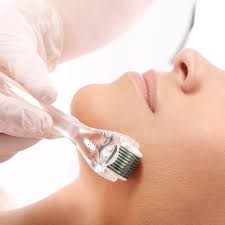
Microneedling is a cosmetic surgery that involves puncturing the skin with a device that has very fine, sharp needle ends. The idea behind microneedling is that once the body detects the microscopic pricks, it tries to heal the cuts, resulting in a renewed appearance; the punctures are relatively superficial, so discomfort is minimal. This procedure rejuvenates your skin by increasing collagen synthesis, which decreases the appearance of wrinkles and fine lines while also improving the overall texture.
On its own, microneedling has relatively minor effects, such as improved skin texture and smoothness. Microneedling can be more powerful when combined with radiofrequency. The dermis is heated by radiofrequency waves that go down the needles, which can enhance collagen formation.
When used with radiofrequency, patients can observe improvements in moderate wrinkles, acne scars, and mild skin tightening. Sharper needles are used in microneedling in the dermatologist’s office, which increases the effects that patients see. You can boost the outcomes of microneedling by combining it with a serum; the serum will penetrate deeper into the skin, resulting in better results.
Microneedling: How to Get Ready
If you’re utilising any potent topical treatments (such as those containing retinol), you should stop using them a few days before your microneedling procedure. Harsh products might irritate the skin, so the gentler the better. In addition to having a cleansed and toned face, you should avoid using retinol for at least 48 hours before the procedure and avoid direct sun exposure for three days previous and three days following. Any aggressive acids should be avoided within a week following the treatment.
Microneedling: What to Expect
Is it painful? After a half-hour of allowing the numbing lotion to soak into your skin, having a slew of needles stab your flesh is quite simple. So, to answer that firmly, it doesn’t hurt, but it doesn’t feel pleasant. In terms of discomfort, you might have a manageable treatment that lasted about 20 minutes. To be honest, some people say that it felt like five minutes, and they were okay in the end. Your brow, hairline, and jawline were more sensitive than the rest of your face. When the tool passes over your cheeks, You might barely feel it, which most doctors verify is the highest level of depth.
Following microneedling performed by Herstellen Clinic Brisbane, the treatment was completed with a soothing serum and moisturising face mask that felt like bliss. Ironically, it doesn’t feel like you have been poked hundreds of times once the numbing lotion wears off a couple of hours later. Despite how terrifying this may sound, you will feel no discomfort at all.